


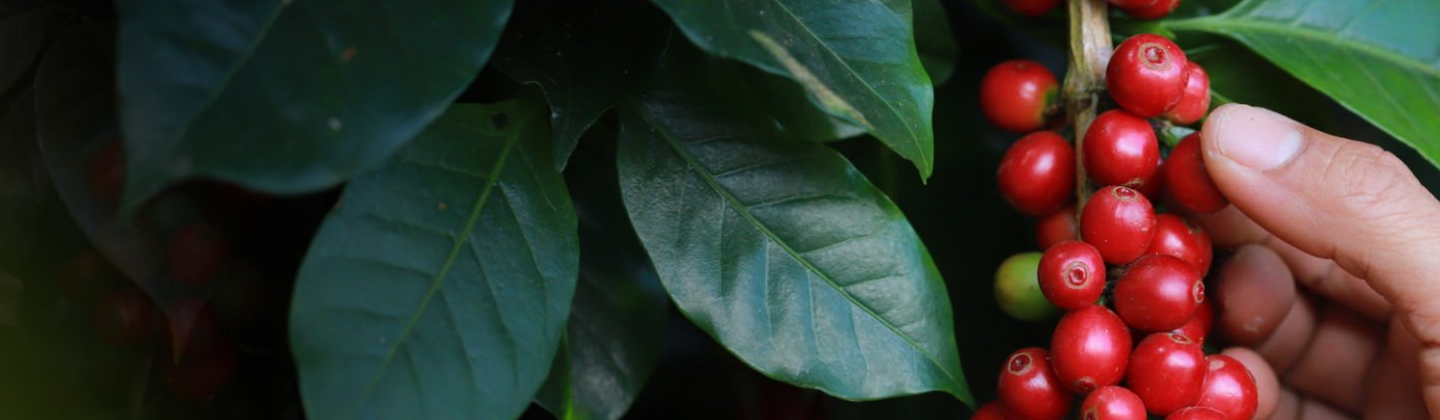
To truly understand Kaʻū coffee, you have to follow its journey—starting in the field, moving through careful processing, and finishing with a thoughtful roast. Grown on the southern slopes of Mauna Loa, Kaʻū coffee reflects both the land it comes from and the hands that guide it from seed to cup. This farm-to-mill process is what gives Kaʻū coffee its smooth character, layered flavor, and growing reputation among coffee lovers.
At Kaʻū Coffee Mill, coffee isn’t just produced—it’s cultivated with intention. Every step, from the orchard to the roastery, is designed to protect quality, flavor, and the connection between coffee and place.
Growing Kaʻū Coffee on the Land
The journey begins at the Kaʻū coffee farm, where trees grow in rich volcanic soil shaped by generations of lava flows. Elevation, cool nights, and consistent rainfall create ideal conditions for coffee cherries to ripen slowly. This slower maturation allows sugars to develop fully, setting the foundation for balanced flavor.

Kaʻū has long been an agricultural region, and coffee is part of a larger relationship between people and land. That connection is explored more deeply in More Than a Cup: How Hawaiʻi-Grown Coffee Connects You to the Land, where farming is seen as both livelihood and stewardship.
Harvesting Kaʻū Coffee Beans at Peak Ripeness
Timing matters. Kaʻū coffee beans begin their life as cherries, and those cherries are harvested only when they reach peak ripeness. Picking too early or too late can disrupt flavor balance, so harvesting is done with care and attention.
This focus on quality is one reason Kaʻū coffee continues to stand out among Hawaiʻi-grown coffees. Each harvest reflects the season, the weather, and the decisions made in the field.
Processing: Preserving Flavor from Cherry to Bean
Once harvested, cherries move quickly from farm to mill. At Kaʻū Coffee Mill, processing happens close to where the coffee is grown, reducing time between picking and pulping. This helps preserve the natural sweetness of Kaʻū coffee beans.
Processing methods—such as washed or natural—shape the final flavor. Clean processing highlights clarity and brightness, while slower drying can deepen sweetness. If you’re curious how processing influences modern coffee trends, From Farm to Cup: Trending Specialty Coffee Drinks offers a broader look at how these techniques show up in the cup.
Drying and Milling at Kaʻū Coffee Mill
After processing, beans are carefully dried to the right moisture level. Too much moisture can cause spoilage; too little can damage structure. Drying is one of the most patient steps in the Kaʻū coffee journey, often taking weeks.
Once dried, beans are milled to remove the parchment layer, revealing the green coffee that will eventually be roasted. This stage is where consistency matters most—uniform beans roast more evenly and express flavor more clearly.
Roasting Kaʻū Coffee for Balance and Character
Roasting is where Kaʻū coffee truly comes alive. At the mill, roasting is done in small batches to highlight the natural qualities developed on the farm. The goal is balance—never overpowering the bean, but letting its origin speak.
Different roast levels bring out different characteristics. Light roasts emphasize brightness and origin, while darker roasts highlight body and depth. If you’d like to explore how roast levels change the experience, Not All Hawaiʻi-Grown Coffee Is the Same: Roast Profiles You Need to Know breaks it down clearly.
You can explore available roasts and beans through the Kaʻū Coffee Mill online shop.
From Kaʻū Coffee Mill to Your Cup

The final step is where Kaʻū coffee meets the drinker. Whether brewed at home or enjoyed during a visit, every cup reflects the decisions made along the way—from farm practices to roast timing.
For those who want to experience this journey firsthand, a visit to the mill adds another layer of appreciation.
Our article Big Island Coffee Tours: Why Kaʻū Is Worth the Drive explains why seeing the process in person changes how coffee tastes. You can also take a tour directly and walk through the farm-to-mill process yourself.
Why the Farm-to-Mill Approach Matters
Kaʻū coffee stands out because it’s not rushed and not outsourced. Growing, processing, and roasting in one place allows quality to be protected at every stage. It also keeps knowledge and care rooted in the community.
This approach ensures that Kaʻū coffee remains consistent, traceable, and connected to its origin—qualities that matter to anyone who values what’s in their cup.
Final Sip: The Story Behind Every Cup of Kaʻū Coffee

From volcanic soil to careful roasting, Kaʻū coffee is shaped by time, land, and intention. Understanding how Kaʻū coffee beans move from farm to mill deepens appreciation for their smoothness, balance, and character.
Whether you’re exploring flavors through the online shop, learning more through the Kaʻū Coffee Mill blog, or planning a visit to the farm, every step of the journey is part of what makes Kaʻū coffee special.
If you have questions or want to learn more, feel free to reach out through our contact page. We’re always happy to talk story over coffee.